
The short answer
Track the lifecycle, not only the submission.
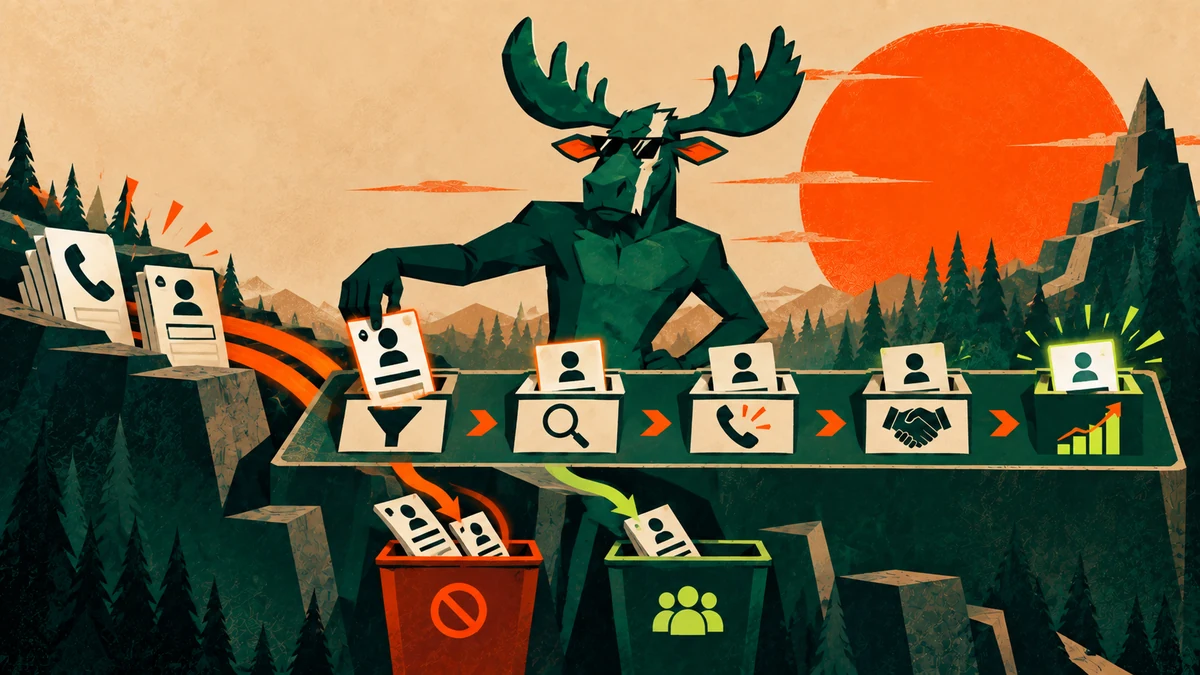
The minimum useful record connects source and landing page to inquiry type, qualification, sales stage, closed status, value, and reason lost. That lets SEO learn which demand becomes good work.
The closed loop
Use six stages with one shared identifier.
- Acquisition: source, medium, campaign where applicable, landing page, device, and timestamp.
- Inquiry: call, form, booking, message, or other customer action.
- Qualification: service fit, geography, urgency, budget, and new-customer status.
- Sales: contacted, estimate scheduled, estimate delivered, won, lost, or unreachable.
- Economics: booked revenue, gross margin or contribution, and repeat value when verified.
- Feedback: return the outcome to the query family, page, market, and campaign decision.
Preserve context
The lead record needs both marketing and operational fields.
| Field group | Examples |
|---|---|
| Source | First known source, latest source, landing URL, referrer |
| Inquiry | Date, channel, call recording permission/status, form name |
| Fit | Requested service, town, property type, urgency |
| Status | Qualified, disqualified, estimate, won, lost |
| Value | Revenue, margin, repeat customer flag |
| Reason | Spam, outside area, wrong service, price, no response |
Separate volume from fit
Lead quality is campaign evidence.
If one page produces many wrong-service calls, the problem may be ambiguous targeting or copy. If qualified leads do not close, inspect response time, intake, pricing fit, estimates, and sales process before assuming search demand is bad. Measurement should expose the handoff instead of assigning every failure to marketing or sales.
Return outcomes to SEO
Use won and lost reasons to change page priorities.
Aggregate outcomes by service, landing page, market, and query family. Strengthen pages producing profitable work, reposition pages attracting the wrong need, and stop celebrating conversions the business cannot or does not want to serve.
The lead count tells you how often the phone rang. Closed-loop tracking tells you whether it was worth answering.
Connect evidence to action
Measurement should change the campaign—not decorate a report.
MooseRank's connected SEO campaign uses search, lead-quality, sales, and revenue evidence to decide what the campaign should protect, improve, build, or stop.
As a owner-led Long Island SEO company, MooseRank keeps measurement tied to qualified Long Island demand rather than national vanity benchmarks.
Make the evidence useful
Connect visibility to the work the business wants.
Bring the campaign cost, lead sources, close rates, margins, and current tracking gaps. MooseRank will define the evidence chain and the next decision it should support.
Straight answers
Common questions
01How do I track leads from SEO?+
Track the landing source and page, record the call or form as an event, preserve source information in the lead record, qualify the inquiry, and update the record when it becomes a customer or is disqualified.
02What counts as an SEO lead?+
Define it before reporting. A useful definition normally requires a genuine new inquiry that matches the business’s services and geography. Spam, vendors, job applicants, and existing-customer support should be separate.
03Can GA4 track closed jobs?+
GA4 can record lead events and accept online or offline event data, but the CRM or job-management system should remain the operational source of truth for qualification, sales status, revenue, and margin.
04Should form submissions and calls be combined?+
They can roll into a qualified-lead total, but keep the original inquiry type available because call and form quality, intent, close rate, and measurement coverage often differ.
05How do I handle leads with missing source data?+
Keep them as unknown rather than forcing attribution. Ask a neutral customer-source question, preserve first-party records, and report the unknown share so measurement quality is visible.
Primary sources
Documentation reviewed
- Google Analytics recommended lead-generation events
- Google Analytics: measure form key events
- Google Analytics key events
Research note: documentation was reviewed September 23, 2026. Calculations and measurement frameworks are planning aids based on the inputs supplied; they are not audited financial statements, attribution certainty, or ranking guarantees.

About the author
The Moose
The Moose is the Founder of MooseRank and writes about SEO strategy, AI search visibility, and the evidence businesses should use to make better search decisions.
Meet The Moose and the MooseRank system