
The short answer
Rank the source before you try to rank the answer.
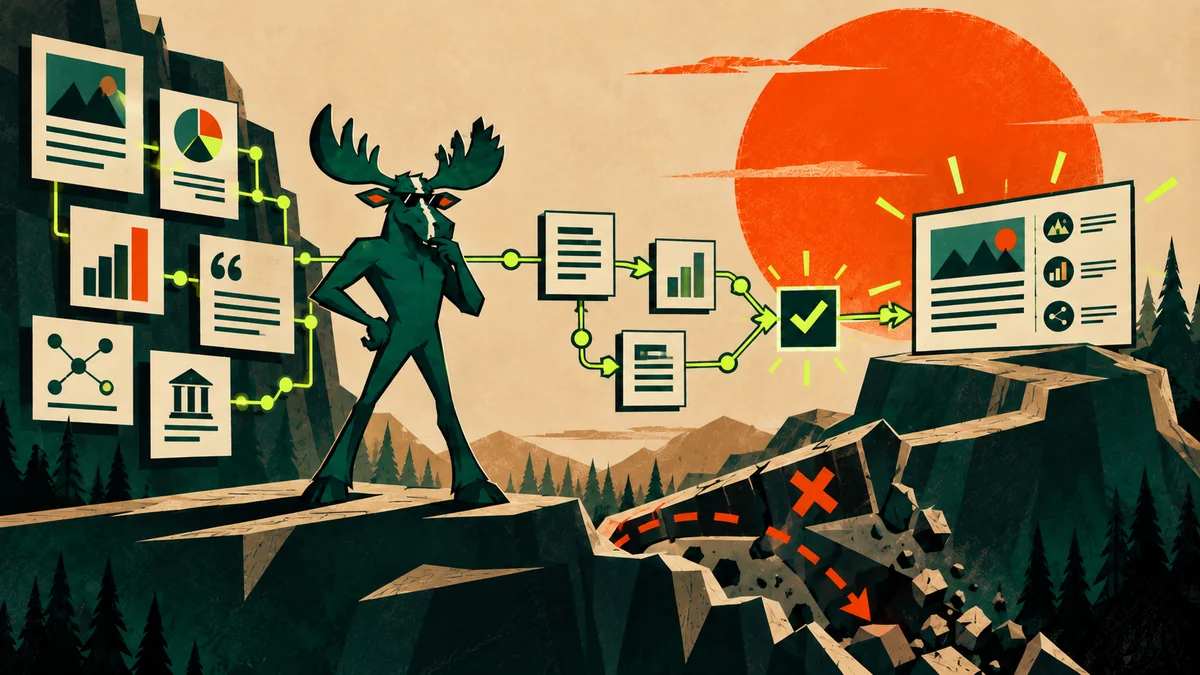
To improve your chances of appearing in ChatGPT, make your important pages accessible to OAI-SearchBot, publish one clear source for each fact or buying decision, identify entities unambiguously, support claims with first-party evidence, earn relevant third-party corroboration, and monitor a repeatable set of search-enabled prompts.
OpenAI has not published a checklist that guarantees citations or recommendations. Its documentation does confirm that ChatGPT can search the web, display citations, and use OAI-SearchBot to surface websites in search results. That gives us a firm starting point: become eligible, become useful, and measure what the system actually returns.
Define the target
What “ranking in ChatGPT” actually means
A Google result is usually a visible ordered list for a query. A ChatGPT response is a generated answer shaped by the wording of the prompt, conversation context, whether live search is used, the sources available at that moment, and how the answer is composed. The same business can be prominent in one response, omitted in the next, and cited without being explicitly recommended.
Mention
The brand, product, expert, or site appears in the answer. This can build awareness even when no link is attached.
Citation
A page is linked as a supporting source for a claim. This is observable evidence, but not proof of recommendation or causation.
Recommendation
The business is suggested for a use case or decision. Accuracy, qualification, and competitive context matter more than mere inclusion.
Representation
The answer describes the entity, service area, capabilities, pricing, evidence, and limitations correctly. An inaccurate mention can be worse than silence.
A defensible campaign tracks all four. Calling one favorable screenshot a “number-one ranking” hides the volatility and gives the team no reliable next action.
The source-to-answer path
Every useful appearance passes through several gates.
Eligibility
The source can be crawled, indexed, fetched, understood, and associated with the correct entity.
Selection
The source is relevant, specific, credible, current enough, and useful for the question being answered.
Representation
The brand is mentioned, cited, recommended, or described—and the result can be checked against business outcomes.
A crawler fix can open the first gate. It cannot force the later gates, and no single page controls every source used in an answer.
The MooseRank framework
Use SOURCE to improve what you can control.
- S
Source ownership
Create a canonical page for each important service, comparison, policy, location, product, and proof point. The page should answer the actual decision rather than repeat a broad sales pitch.
- O
Open access
Allow the appropriate search crawler, return a successful response, expose the content in the rendered HTML, and keep the page reachable through internal links and an XML sitemap.
- U
Unambiguous entities
Name the business, service, person, product, place, and relationship explicitly. Keep core facts consistent across the site, structured data, profiles, directories, and reputable third-party references.
- R
Reliable evidence
Support meaningful claims with methods, dates, samples, images, source documents, named authors, and clear limitations. Original evidence gives other publishers a reason to cite the business.
- C
Corroboration
Earn independent coverage, reviews, listings, expert references, partnerships, and relevant links. Third parties can confirm claims that a brand-owned page cannot validate by itself.
- E
Evaluation
Test a controlled prompt set repeatedly. Record mentions, citations, linked URLs, competitors, accuracy, search use, referrals, and qualified outcomes before deciding what changed.
Start with technical eligibility
Allow the search bot you actually mean to allow.
OpenAI's crawler documentation separates OAI-SearchBot from GPTBot. OAI-SearchBot is used to surface websites in ChatGPT search results. GPTBot concerns content that may be used to improve OpenAI's generative foundation models. The controls are independent.
Allowing OAI-SearchBot can make a page eligible for ChatGPT search. It does not guarantee retrieval, citation, recommendation, or a favorable answer.
Check robots.txt, edge security, bot-management rules, authentication, status codes, canonicals, noindex directives, rendering, and server logs. OpenAI also recommends allowing requests from its published IP ranges. A robots rule is only one layer; a firewall can still block the request.
- OAI-SearchBot is not disallowed;
- priority URLs return a real 200 response;
- important copy exists in rendered HTML;
- canonical and indexing directives agree;
- the crawler is not challenged or rate-limited;
- pages have internal links and sitemap coverage.
- GPTBot permission with search inclusion;
- ChatGPT-User fetches with automatic crawling;
- crawl access with source selection;
- schema markup with guaranteed citation;
- llms.txt experimentation with a published requirement;
- one successful fetch with durable visibility.
Build answerable sources
Give each important decision one page that deserves to be cited.
A page becomes easier to retrieve and use when its purpose is unmistakable. Lead each section with a direct answer, then provide the scope, evidence, exceptions, and next step. Do not split one subject across several near-duplicate pages or force a system to infer the core fact from a vague brand story.
| Decision | Best owned source | Evidence to include |
|---|---|---|
| What does the business do? | A focused service or product page | Defined deliverables, audience, process, boundaries, examples, and relevant proof |
| Where does it operate? | A substantive market or location page | Service-area facts, local process, projects, logistics, licensing, and genuine local context |
| Which option is better? | An honest comparison page | Decision criteria, tradeoffs, best-fit cases, methodology, and dated product facts |
| Can the claim be trusted? | A case study or original research page | Starting condition, method, dates, sample, result, limitations, and supporting artifacts |
| Who is responsible? | An author, expert, or company page | Role, relevant expertise, editorial accountability, contact path, and referenced work |
Structured data can reinforce those relationships, but it should describe visible facts—not manufacture authority. Connect Organization, Person, Service, Article, WebPage, ImageObject, and BreadcrumbList entities using stable identifiers where they genuinely apply.
Write for passage-level usefulness
Make the fact complete without making the page robotic.
Answer systems may need a passage that remains understandable when separated from the rest of the page. That does not mean turning every paragraph into a keyword block. It means naming the subject, answering the question directly, and keeping the evidence close enough to verify.
- State the subject.Use the full entity or service name where ambiguity is possible instead of relying on “we,” “it,” or a clever headline.
- Lead with the answer.Put the concise response immediately below the relevant question or heading, then explain the reasoning and conditions.
- Define the boundary.Say who the advice is for, which market it covers, when it was checked, and where an exception changes the recommendation.
- Attach the proof.Attribute data, explain the method, link the primary source, and keep dates with time-sensitive claims.
- Keep navigation meaningful.Use descriptive internal anchors that connect the supporting page to its parent topic, relevant evidence, and adjacent decision.
- Show accountable authorship.Use a visible byline and a real author or reviewer profile. Do not invent credentials, testing, clients, or experience.
Authority exists beyond the domain
A business cannot self-declare its way into consensus.
Owned pages are necessary for precise facts, but recommendations often depend on how the wider web describes the entity. The useful goal is not mention volume. It is relevant, independent corroboration that connects the brand to the right category, market, expertise, and outcomes.
- coverage from relevant industry publications;
- accurate association and directory profiles;
- substantive customer reviews with real context;
- partner, supplier, or event references;
- citations of original research or tools;
- expert contributions where the expertise is genuine.
- paid link networks and fake profiles;
- mass-produced guest-post variations;
- fabricated reviews or forum seeding;
- press releases with no independent reporting;
- irrelevant mentions purchased for volume;
- claims that cannot be checked on an owned source.
This is where the relationship between GEO and SEO becomes practical: crawlability, relevance, entity clarity, links, and reputation still matter, while the observable output expands from rankings and clicks to citations, mentions, and answer accuracy.
A focused implementation
A 30-day ChatGPT visibility sprint
- 01
Choose the decisions
Select 20 to 30 commercially meaningful prompts covering services, comparisons, use cases, locations, objections, and branded accuracy. Record the exact wording, market, platform mode, and intended outcome.
- 02
Preserve the baseline
Run the prompts with search enabled where appropriate. Save the full answers, citations, linked pages, competitors, inaccuracies, date, and settings. Do not reduce the baseline to one visibility score.
- 03
Audit eligibility
Review OAI-SearchBot access, response codes, rendering, canonicals, indexing directives, internal links, sitemaps, structured data, and security controls for the priority sources.
- 04
Fix the source map
Assign every decision to one canonical owned page. Consolidate duplicates, close obvious content gaps, correct conflicting entity facts, and connect supporting evidence through useful internal links.
- 05
Add proof before prose
Strengthen the pages with first-party examples, methods, dates, images, limitations, quotes, and source documents. Publish claims that another credible source could responsibly reference.
- 06
Re-test and annotate
Repeat the same prompt groups on a set cadence. Mark every website, profile, coverage, and technical change. Investigate patterns across several runs before calling an increase or decline meaningful.
Measure the answer, then the business
Your scorecard needs more than mentions.
OpenAI's official web-search documentation confirms that ChatGPT can show search results and citations in the conversation. Those citations are useful observations, but generated answers can vary. Measurement should preserve the conditions around every observation.
| Layer | Record | Question answered |
|---|---|---|
| Eligibility | Crawler rules, bot requests, status codes, indexability, rendered content, and discoverability | Could the source be accessed and understood? |
| Prompt visibility | Prompt, market, date, search mode, full answer, mention, prominence, sentiment, and competitors | Did the brand appear for a decision that matters? |
| Source visibility | Cited domain, exact URL, claim supported, repeat citations, and source type | Which owned or third-party source shaped the answer? |
| Accuracy | Correct facts, omissions, outdated details, misattribution, and unsupported claims | Was the business represented responsibly? |
| Commercial effect | AI referrals, assisted conversions, qualified leads, branded demand, and sales feedback | Did visibility contribute to a valuable outcome? |
If the tooling question comes first, use our guide to LLM SEO tools to separate market discovery, controlled prompt tracking, source diagnosis, and business measurement.
Avoid false certainty
Seven shortcuts that are not a ChatGPT strategy
- Stuffing “ChatGPT” into every pageThe target is the user's decision and the supporting source, not repetition of the platform name.
- Publishing hundreds of thin AI pagesNear-duplicate coverage can blur page ownership, weaken evidence, and make the information environment harder to interpret.
- Adding unsupported schemaMarkup is not a credibility generator. It should mirror visible, verifiable content and stable entity relationships.
- Buying mentions and fake conversationsManufactured consensus creates platform, reputation, and legal risk without building legitimate category association.
- Treating llms.txt as a magic fileIt is not listed in OpenAI's crawler documentation as a ChatGPT search requirement. Fix conventional access and source quality first.
- Confusing a citation with a conversionA source link may support one sentence without recommending the brand or producing a qualified visit.
- Reporting one favorable answer as a rankWithout repeated prompts, preserved settings, full responses, and change annotations, the screenshot is an anecdote.
Connect the work
ChatGPT visibility is an output of the whole campaign.
Technical access cannot compensate for weak evidence. Great content cannot correct an entity contradicted across directories and third-party sources. Authority cannot rescue a page that never answers the buyer's question. Measurement cannot explain a change the team failed to annotate.
Our SEO services on Long Island bring these priorities into the wider search strategy, including an AI search optimization campaign: establish the prompt and source baseline, repair technical eligibility, clarify page ownership and entities, add evidence, earn corroboration, and connect answer visibility to qualified demand.
Build a source worth selecting
Stop chasing the screenshot. Improve the evidence path.
MooseRank can map the commercial prompts, audit source eligibility, identify entity and evidence gaps, and build a measurement loop that survives more than one answer.
Straight answers
How to rank in ChatGPT: common questions
01Can a website rank number one in ChatGPT?+
Not in the same universal, persistent sense as a conventional search result. ChatGPT answers can vary by prompt wording, search use, time, location, conversation context, and available sources. A useful program measures whether a brand is mentioned, cited, represented accurately, and connected to the right source across a controlled set of commercially relevant prompts.
02How do I get my website cited by ChatGPT?+
Start by allowing OAI-SearchBot, returning indexable pages successfully, and publishing a clear canonical source for the fact or decision you want to support. Make the entity, claim, evidence, date, and author easy to identify. Then earn legitimate corroboration from relevant third-party sources and monitor repeated search-enabled answers. These steps can improve eligibility and usefulness, but they do not guarantee a citation.
03Should I allow GPTBot to rank in ChatGPT search?+
OpenAI documents GPTBot and OAI-SearchBot as independent controls. OAI-SearchBot is the crawler used to surface websites in ChatGPT search results. GPTBot concerns content that may be used to improve generative AI foundation models. A site can allow OAI-SearchBot for search visibility while disallowing GPTBot for training preferences.
04Do I need an llms.txt file to appear in ChatGPT?+
OpenAI's current crawler documentation identifies robots.txt controls for OAI-SearchBot, GPTBot, and ChatGPT-User; it does not list llms.txt as a requirement for ChatGPT search inclusion. An llms.txt file may be an experimental convenience for other systems, but it should not replace crawlable pages, robots.txt, sitemaps, internal links, structured data, or clear source content.
05How long does ChatGPT SEO take?+
There is no reliable universal timeline. OpenAI notes that robots.txt changes can take about 24 hours to affect its systems, but improved access is only an eligibility change. Content discovery, source selection, third-party corroboration, and answer changes can take longer and may vary by prompt. Measure a stable prompt set for at least several weeks and annotate every material change.
Primary sources
OpenAI documentation reviewed
Research note: OpenAI documentation was reviewed on September 10, 2026. MooseRank distinguishes documented platform behavior from strategic inference. No tactic on this page is presented as a guaranteed ranking factor or permanent placement.

About the author
The Moose
The Moose is the Founder of MooseRank and writes about SEO strategy, AI search visibility, and the evidence businesses should use to make better search decisions.
Meet The Moose and the MooseRank system